
Last updated November 22, 2026
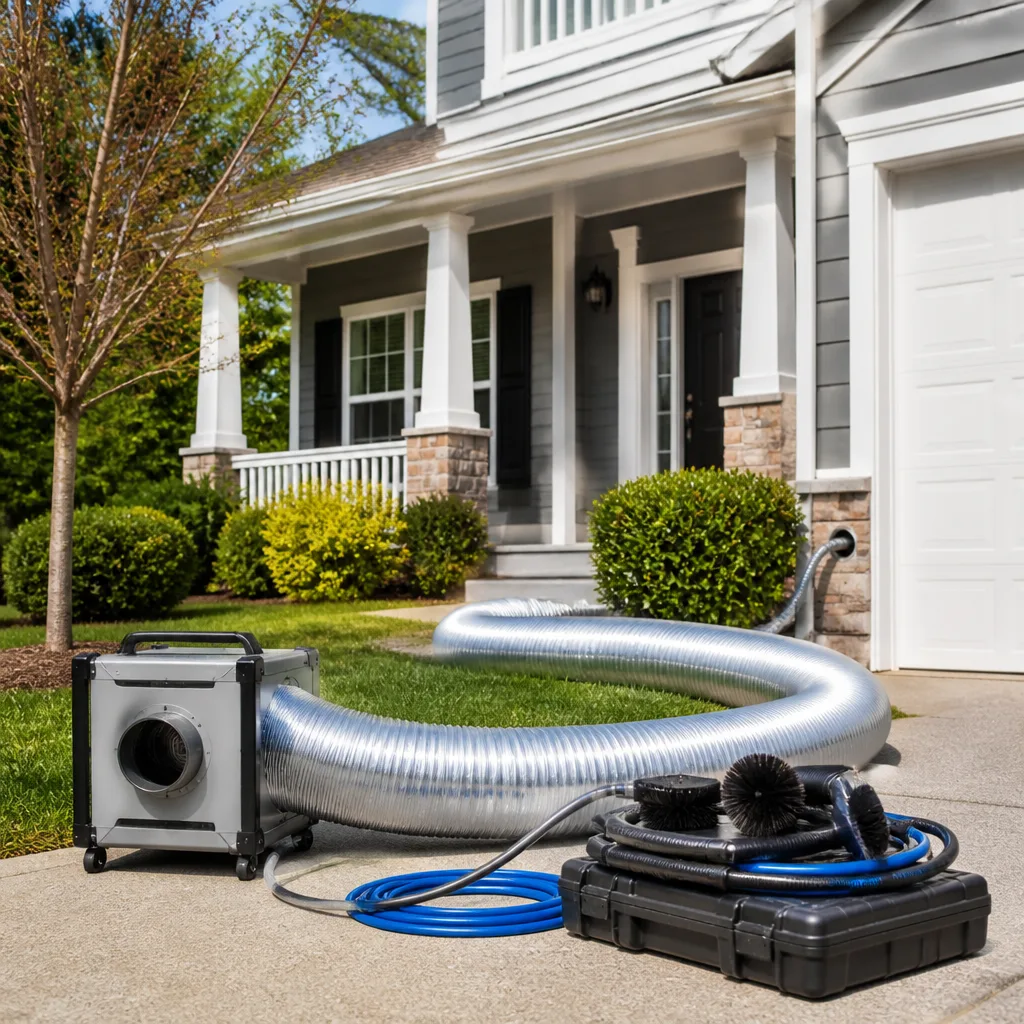 Whole-home duct cleaning
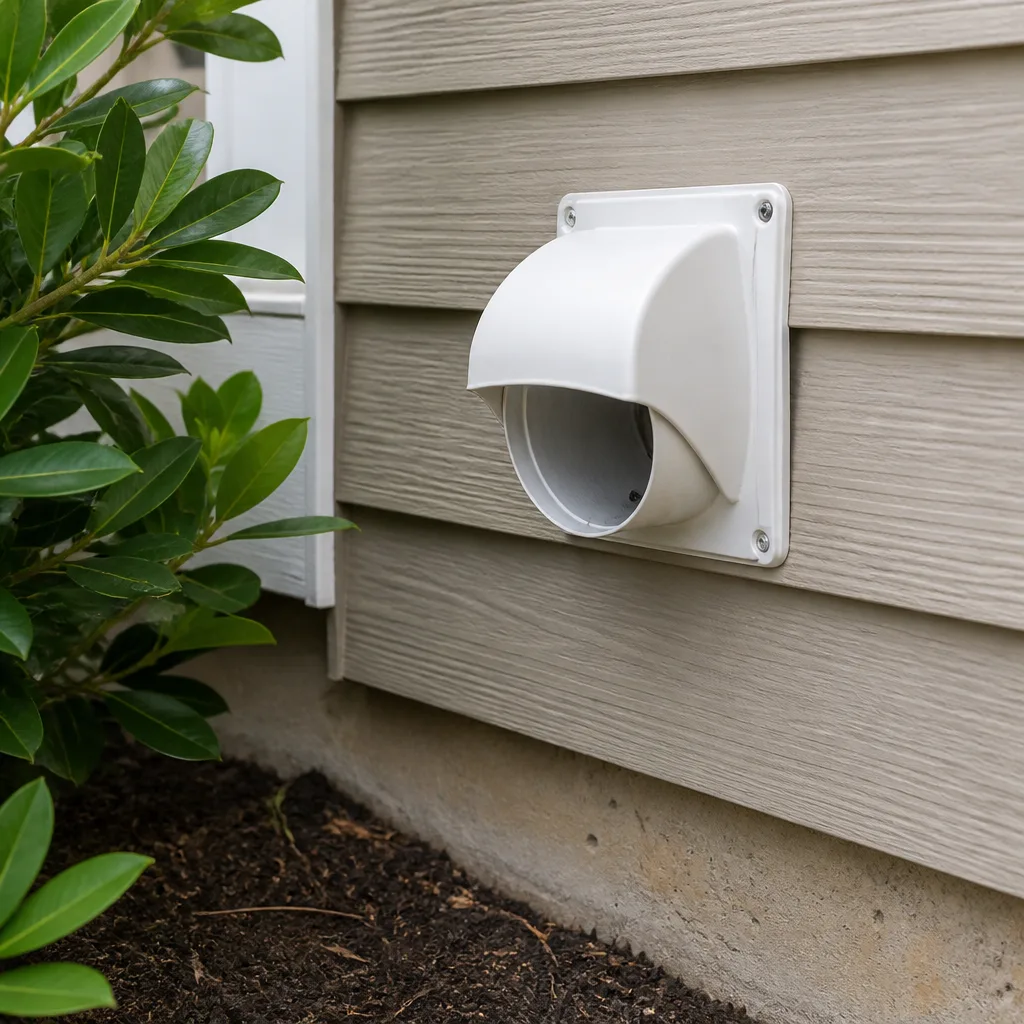 Dryer vent cleaning
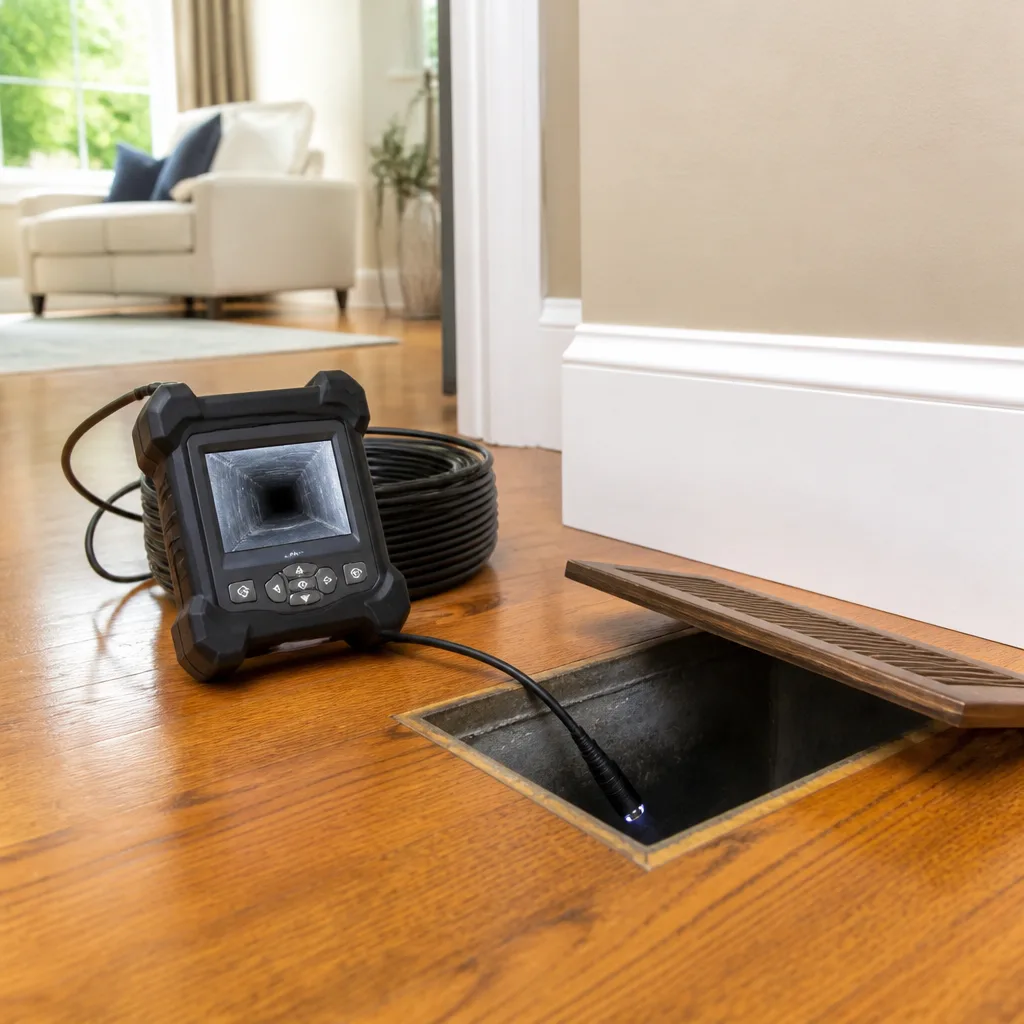 Camera inspection
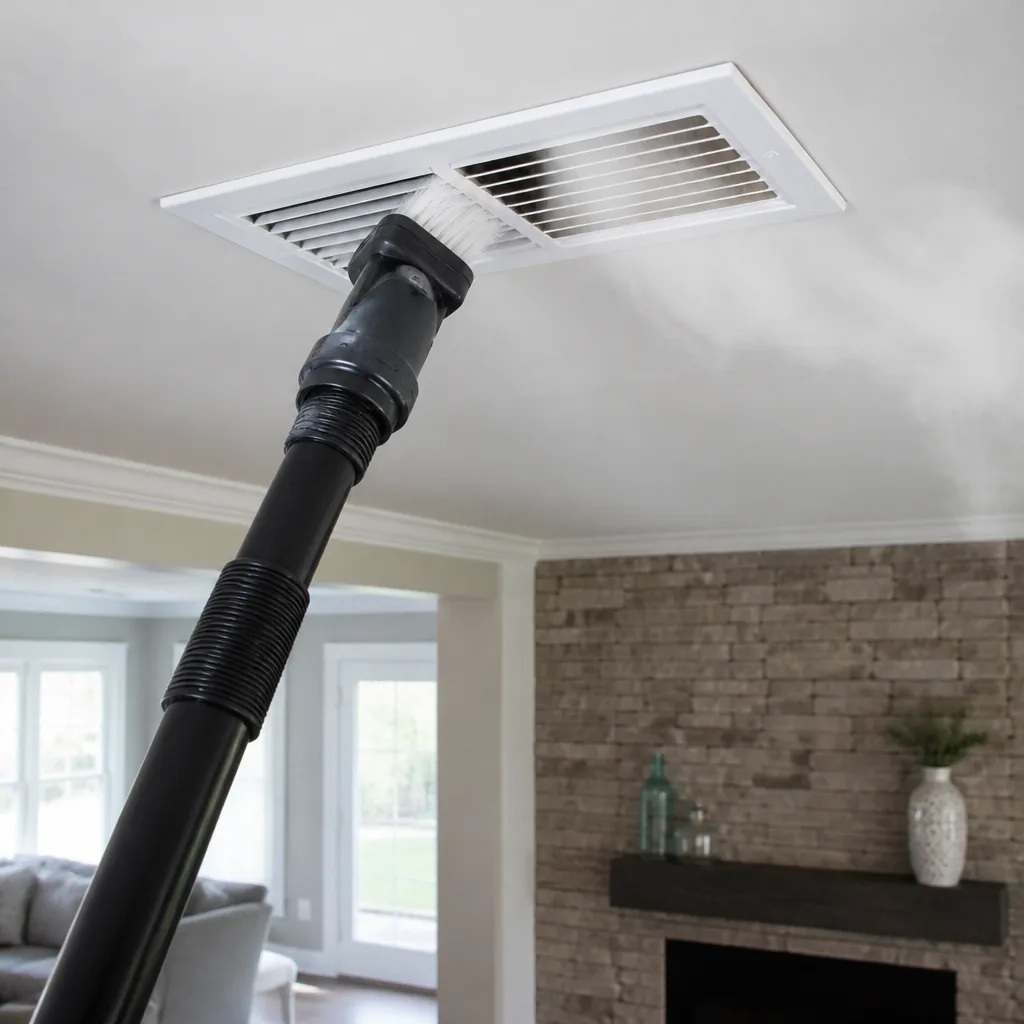 Sanitizing & deodorizing
Whole-system duct and dryer vent check with before-and-after photos - you see exactly what came out of your vents
That "$99 whole-house special" is a bait ad - the real number appears once they are in your hallway, or the "clean" is a shop-vac at the register. We photograph the inside of your ducts before and after instead.
Air Duct Cleaning Emergency Preparedness Guide for Jackson Heights Homes
After a kitchen fire in a Jackson Heights apartment, most residents focus on the visible soot on the walls and the smell in the hallway. The duct system is the part nobody thinks about. Combustion particulate that drifted into the return during the event keeps recirculating every time the HVAC runs, which means the air in every room carries a little more of that event than it should, long after the cleaning rags are put away. The same logic applies to floodwater, pest intrusions, and renovation dust that enters through a shared shaft. What follows is a scenario-by-scenario guide to what to do in the first hours, what restoration actually involves, and how to keep a bad situation from spreading through the rest of a Jackson Heights home.
Quick Answer
After a fire, flood, pest intrusion, or building-wide renovation in Jackson Heights, shut the HVAC system off first and leave it off until a professional has inspected the ductwork, because running the system redistributes contaminants into every room. Wet ductwork can begin supporting mold growth within 24 to 48 hours of moisture exposure, and fire, pest, and construction events all leave residue inside the duct system that surface cleaning cannot reach. Insurance claims typically require a written inspection report with photographic evidence before remediation is approved.
Styles & brands we work with
- Whole-home duct cleaning
- Dryer vent cleaning
- Camera inspection
- Sanitizing & deodorizing
Table of Contents
- Why Ductwork Is the Overlooked Victim of Any Emergency
- Post-Flood Protocol: What to Do in the First 48 Hours
- Post-Fire and Smoke Events: Surface Soot vs. Combustion Particulate
- Pest Infestations: Why Rodent Contamination Needs Containment
- Renovation and Construction Dust Events in Multi-Family Buildings
- How to Document Duct Contamination for an Insurance Claim
- What Professional Duct Restoration Actually Involves
- Preparing Your Duct System Before the Next Emergency
Why Ductwork Is the Overlooked Victim of Any Emergency
The duct system is the only part of a home that touches every room and also hides from view. That combination is exactly why it absorbs contamination during an emergency and then quietly distributes it for months afterward. When a fire burns in one unit, smoke finds the return registers on its way through the building. When a pipe bursts on a floor above, water travels down framing and pools in low sections of flex duct. When rodents get into a ceiling void, they nest in the insulation wrapped around the trunk line because it is warm and undisturbed.
In Jackson Heights, a large share of the housing stock is pre-war apartment buildings and attached row houses, many with ductwork that was retrofitted decades after the original construction. That retrofit history matters in an emergency. Original shafts, shared chaseways, and adapter transitions between old and new duct sections create pockets where debris accumulates and where contamination can cross between units faster than a resident expects. A garden-apartment basement unit off 37th Avenue and a top-floor co-op near 74th Street can have wildly different duct layouts even within the same block.
What we’ve found time and again is that the damage that matters most isn’t the visible kind. It’s what settled inside the return trunk and the supply branches during the event and stayed there. Air moves through those runs every time the fan kicks on. That’s the mechanism that turns a localized emergency into a whole-home air quality problem, and it’s why the recovery steps below always start with turning the system off.
Post-Flood Protocol: What to Do in the First 48 Hours
Floodwater in ductwork is a time-sensitive problem. The clock starts the moment water enters the system, not the moment you notice the smell. Most duct materials, including the fiberglass interior of many flex runs and the porous insulation board used in older trunk lines, hold moisture long after visible water drains away. Once that moisture sits, mold colonization becomes likely within about 24 to 48 hours depending on temperature and ventilation. In a humid Jackson Heights summer, that window closes faster than most people assume.
Here’s the sequence to follow:
- Shut the HVAC system off at the thermostat and, if you can safely reach it, at the breaker. Do not run the fan to “dry things out.” Running the system pushes moisture-laden air into rooms that would otherwise stay dry.
- Stop the water source and document everything before cleanup begins. Photograph standing water, waterlines on ductwork, and the affected registers. Timestamped photos are what insurers want.
- Call your building superintendent or management company if you’re in a multi-family building. Water in one unit’s ducts often means water in a shared shaft or in the unit below. Jackson Heights co-ops and condos along Northern Boulevard frequently share vertical chases.
- Do not run a household dehumidifier pointed into the registers. This can pull moisture deeper into duct sections that would otherwise dry from the outside in.
- Have the ductwork inspected and, where needed, cleaned and sanitized before the system goes back on. The system should stay off until a professional confirms the interior is dry and free of growth.
What restoration involves once a specialist arrives is more than drying. Affected sections are usually opened for direct inspection, cleaned with professional equipment, treated with an antimicrobial product formulated for duct interiors, and in severe cases replaced outright. The brands we rely on for the sanitizing step, Abatement Technologies and Guardsman, come out of the environmental remediation industry rather than the retail shelf, because post-flood ductwork is a remediation job, not a housekeeping one.
Post-Fire and Smoke Events: Surface Soot vs. Combustion Particulate
Surface soot cleaning and combustion particulate removal are two different jobs, and conflating them is one of the most common post-fire mistakes. Surface cleaning addresses walls, ceilings, and cabinets with a sponge and a degreaser. Combustion particulate removal addresses the fine, acidic residue that entered the duct system during the fire and settled onto duct walls, blower components, and the evaporator coil. That residue is invisible from inside the apartment. It’s also what keeps generating the smoke smell long after the visible mess is gone.
Smoke travels through a building the same way air does. In a Jackson Heights apartment building, a fire two floors up can push smoke into your unit’s return through the shared shaft, even if your unit never had a flame inside it. The smell that returns every time the heat or AC kicks on is the tell. That smell is particulate being redistributed, and it will keep happening until the duct interior is professionally cleared.
What post-fire duct work involves:
- Isolation of the affected system so cleaning doesn’t contaminate clean sections
- Negative-pressure containment around the work area, standard for restoration work
- Mechanical agitation of duct walls using tools like the Rotobrush system to loosen adhered particulate
- High-volume HEPA extraction through a Nikro unit, which is the same class of equipment certified restoration contractors use after fire losses
- Cleaning of the blower, coil, and accessible plenum surfaces, because particulate settles there as well
- Optional sanitizing treatment with Abatement Technologies or Guardsman products once surfaces are clean
If you can still smell smoke in a room when the system runs, the ductwork has not been properly cleared. That’s the simplest field test, and it’s the one we use to confirm a job is actually finished.
Pest Infestations: Why Rodent Contamination Needs Containment
Rodent activity inside ductwork is a biohazard scenario, not a routine cleaning scenario. Droppings, urine, nesting material, and carcasses carry pathogens, and disturbing them without containment sends contaminated dust into the living space. A standard brush-and-vacuum approach without proper containment can make the air quality worse in the short term. This is one of the few situations where doing nothing until a specialist arrives is genuinely better than trying to clean it yourself.
Signs you may have a pest problem in the ductwork include a musky or ammonia-like odor that gets stronger when the system runs, scratching sounds in the walls or ceiling, visible droppings near registers, and increased rodent sightings in the unit overall. Jackson Heights row houses and older apartment buildings have plenty of entry points: gaps around radiator pipes, unsealed penetrations between units, and soffit gaps in garden-level units.
The containment protocol looks like this:
- Keep the HVAC system off until the extent of contamination is assessed. Running the system distributes fine particles from dried droppings.
- Seal the registers in the affected rooms with plastic sheeting and tape to limit cross-migration while you wait for service.
- Do not vacuum with a household vacuum. Standard vacuums exhaust fine particulate back into the room.
- Professional remediation involves negative-pressure containment, HEPA extraction with equipment like the Nikro line, removal of contaminated insulation and nesting material, disinfection with a product like Guardsman, and sealing of entry points afterward.
- Address the entry point, not just the contamination. Otherwise the problem returns within a season.
After the ducts are cleared, a follow-up inspection of the building envelope and duct sealing service to close the entry points is the piece that actually solves the problem long term. Cleaning-only companies stop short of this step, which is why we build repair and sealing into the same visit.
Renovation and Construction Dust Events in Multi-Family Buildings
Construction dust in a Jackson Heights apartment building is an emergency the same way a fire is, even though it doesn’t feel like one. When a neighboring unit is gutted, fine drywall dust, silica particulate, and fiberglass from insulation travel through shared shafts, elevator lobbies, and gaps in the building envelope. Much of it lands inside the HVAC returns of units that aren’t even being renovated.
Drywall dust is abrasive, and it is one of the more damaging contaminants for HVAC components. It settles on blower blades and evaporator coils, restricting airflow and cutting system efficiency. Over the course of a long renovation, an unprotected system can accumulate enough fine particulate that blower performance drops noticeably.
What to do when renovation dust is affecting your unit:
- Photograph the visible dust in your unit and the dates of the renovation work. This documentation matters if the building or contractor is responsible for cleanup.
- Change your HVAC filter immediately and again when the renovation finishes. If you have a Honeywell or Aprilaire filter cabinet, use the correct replacement size and MERV rating rather than a generic cut-to-fit filter.
- Have the ductwork inspected once construction dust has settled. Visible dust in the return registers usually means the trunk line needs professional attention.
- Ask building management whether the renovation contractor used dust barriers and negative air in the work area. If they didn’t, the particulate load in surrounding units will be significantly higher.
- Schedule professional duct cleaning after the renovation is complete, not during it, so the cleaning isn’t undone by ongoing work.
A duct sealing service after a renovation is often worth the investment too. Gaps that let construction dust in also let conditioned air out, and fine particulate from a renovation is a reliable indicator that the duct system was never well sealed.
How to Document Duct Contamination for an Insurance Claim
Insurance claims for duct remediation succeed or fail on documentation. An insurer needs to see that the contamination exists, that it’s tied to a covered event, and that the proposed work is proportionate to the damage. Without a written inspection report with photos, most claims get denied or reduced. With one, they usually don’t.
A proper inspection report for a duct remediation claim should contain:
- Photographs of the affected ductwork interior, with location labels (which register, which run)
- A written description of the contaminant type (soot, mold, rodent evidence, drywall particulate) and the affected square footage of duct interior
- Moisture readings on duct components if the event involved water
- An assessment of whether repair or replacement is needed for each affected section
- A scope of work outlining the cleaning, sanitizing, and any repair or sealing steps proposed
- Itemized pricing by task, so the insurer can see what’s covered
At least one photo of the “before” condition for each area noted is the standard, and before-and-after photos of the actual affected ductwork are what support the claim most effectively. Anything less tends to prompt a callback or a partial denial. We photograph every section we work on, both before and after, and provide the written report to the homeowner or landlord so they can submit it directly.
Two things to remember when filing: report the loss promptly, since most policies have notification windows, and ask whether your policy covers “reasonable and necessary remediation” as a distinct line item from the original event. Many policies do, but the request has to come from you.
What Professional Duct Restoration Actually Involves
Duct restoration after an emergency is a sequence, not a single service call. The best work is done in stages, and skipping a stage usually shows up later as a smell, an efficiency drop, or a repeat contamination. Industrial-grade equipment run by an experienced hand is what makes the sequence work; consumer-grade equipment cannot generate the negative pressure or the agitation needed to clear adhered contaminants.
The five stages we work through on a post-emergency job:
- Assessment and containment. Every opening is inspected with a camera, and negative-pressure containment is set up around the work area so released particulate exhausts outside rather than into the home.
- Source removal. Mechanical agitation with a Rotobrush system loosens adhered material from duct walls; high-volume extraction pulls it out through a HEPA-filtered Nikro unit. This is the step that actually clears the duct, and it’s the step that cleaning-only companies often shortcut with a single pass.
- Sanitizing. Once surfaces are clean, an antimicrobial treatment from Abatement Technologies or Guardsman is applied inside the duct to address residual microbial growth. Sanitizing a dirty duct is pointless, which is why this step comes after removal, not before.
- Repair and sealing. Gaps, disconnected joints, and damaged sections left behind by the emergency get sealed or replaced. This is what stops the same entry point from reintroducing the same problem.
- Verification. A final walkthrough with photos, a confirmation that air is moving properly at every register, and a review of the filtration setup. If your home has a Honeywell or Aprilaire filtration system, we’ll confirm it’s sized and set correctly so it can help keep the duct interior clean going forward.
The full arc, from cleaning to sealing, is what separates an emergency fix from an emergency that comes back. If this is the first time you’ve had the ducts serviced, our air duct cleaning page covers what a routine whole-system cleaning involves and how it differs from an emergency restoration. For the fire-safety side of household ductwork, dryer vent cleaning is worth pairing with any post-emergency visit, since a clogged dryer vent is one of the leading causes of household fires.
Preparing Your Duct System Before the Next Emergency
Most of what makes an emergency worse in ductwork is preventable with a few pre-emptive moves. None of this requires an invasive project; it’s mostly about knowing your system and keeping the filtration right.
What to do now, before anything happens:
- Locate your HVAC shutoff at the thermostat and at the breaker, and label them. Knowing this in advance saves the scramble when water is running across the floor.
- Keep a current photo of the duct layout on your phone if your building has provided one, or ask the super for one. It speeds up assessments during a service call.
- Check filtration sizing for any Honeywell or Aprilaire cabinet. A correctly sized filter captures far more particulate than a loose one, and that filter is what stands between an event and the inside of your duct system.
- Have the ducts inspected and sealed if they’ve never been looked at. Small gaps that didn’t matter for efficiency become real entry points during a fire, a pest event, or a renovation.
- Keep the number of a duct specialist alongside your plumber, electrician, and super. Calling the general HVAC company when a specialized job is needed is a common source of delay.
- In a multi-family building, ask management how the building handles dust containment during renovations and what the protocol is after a fire in any unit. The answer tells you a lot about how your own unit will be affected.
Jackson Heights buildings face a particular mix of risks: dense multi-family layouts, ductwork that has usually been retrofitted or adapted, and shared shafts that move air between units. A little preparation goes a long way in a building where the duct system belongs, in some sense, to more than one household. Routine HVAC cleaning as a baseline keeps the whole system, from coil to register, in better shape when something does happen.
Common Mistakes to Avoid
- Running the HVAC system to “clear the air” after a fire or flood. Running the fan distributes contaminants into every room. Shut it off and leave it off until the ductwork is professionally inspected.
- Treating surface soot cleaning as if it were duct cleaning. Soot on the walls and particulate inside the ducts are two separate problems. Cleaning the visible surface without addressing the duct interior is why smoke smell comes back after a fire in a Jackson Heights apartment.
- Vacuuming rodent contamination with a household vacuum. Standard vacuums exhaust fine particulate back into the room. Rodent contamination needs HEPA extraction with negative-pressure containment, not a shop vac.
- Skipping the repair and sealing step after the ducts are cleaned. If a gap let contamination in, the same gap lets it back in after the cleaning. Cleaning-only companies leave this unresolved.
- Assuming a renovation in a neighboring unit won’t affect your ducts. Shared shafts and gaps in the building envelope let construction dust travel. In a Jackson Heights multi-family building, the renovation two units away is your problem if the barrier isn’t in place.
- Filing an insurance claim without photos and a written inspection report. Insurers need evidence tied to the specific event. A claim filed without photos and an itemized scope is usually denied or reduced.
- Waiting to address post-flood moisture. Mold colonization can begin within 24 to 48 hours of moisture exposure in ductwork. Waiting for “it to dry out on its own” often means a much larger remediation comes later.
See the difference
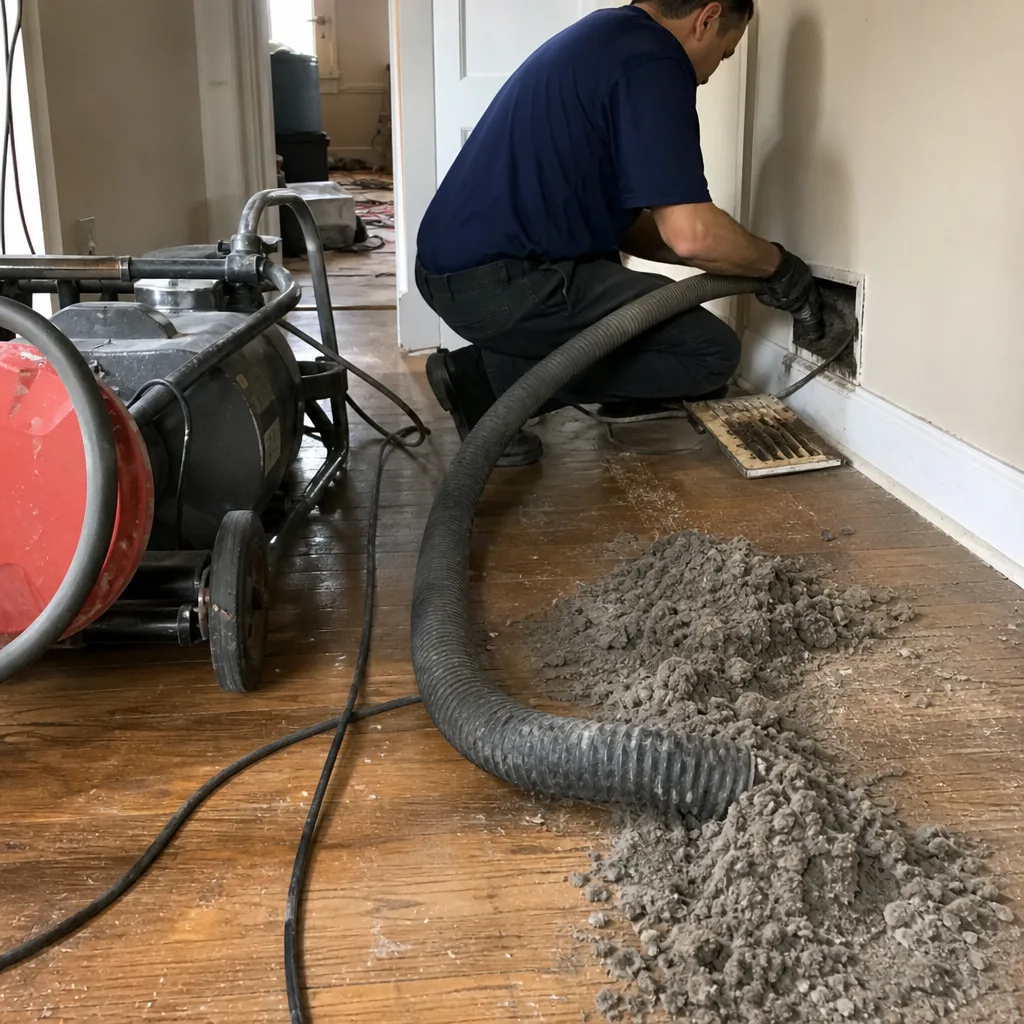 Before
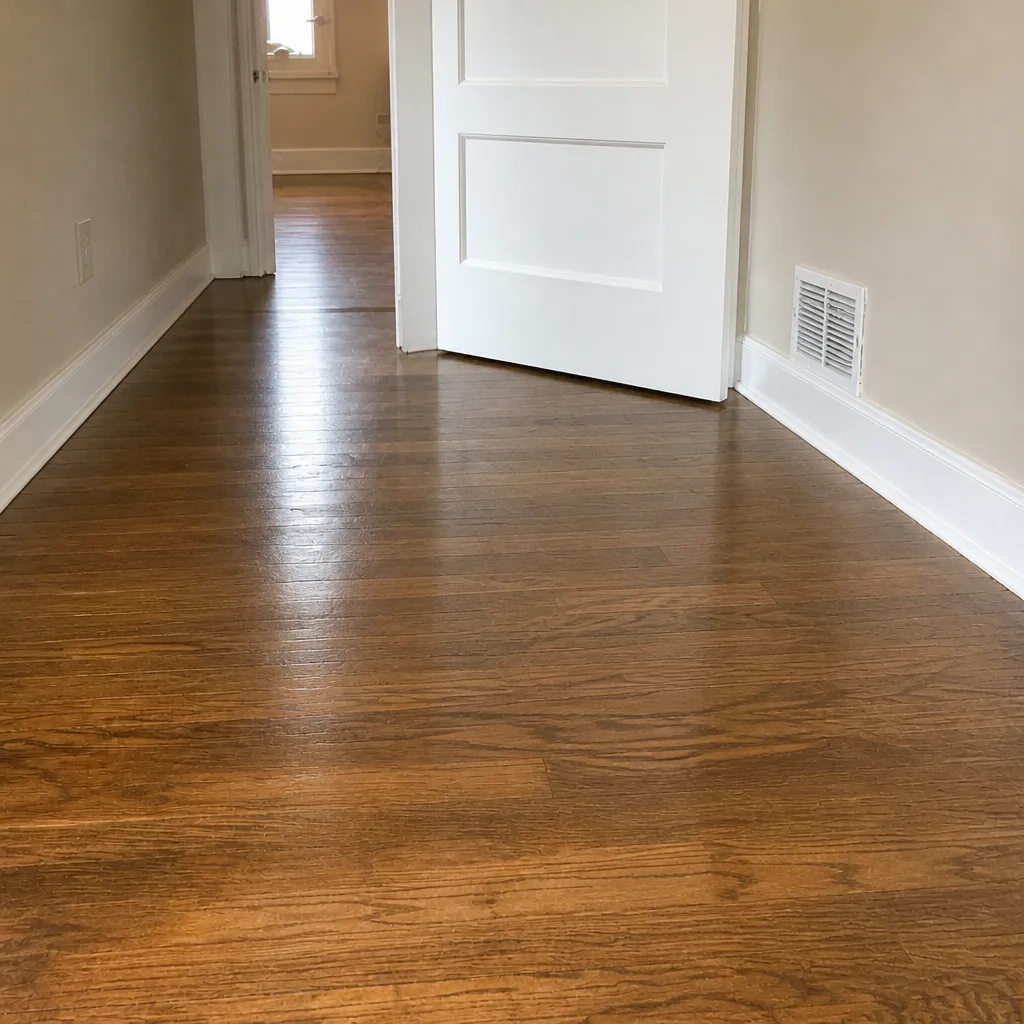 After
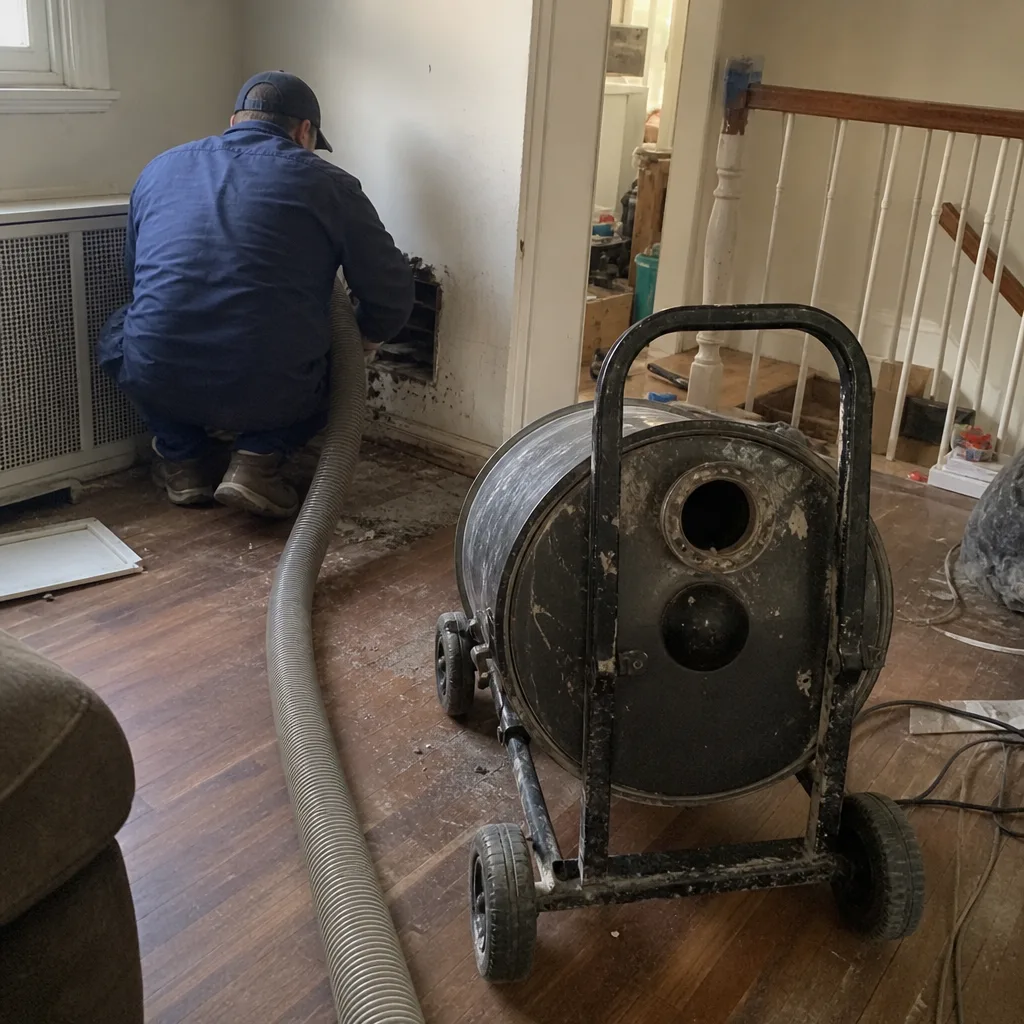 Before
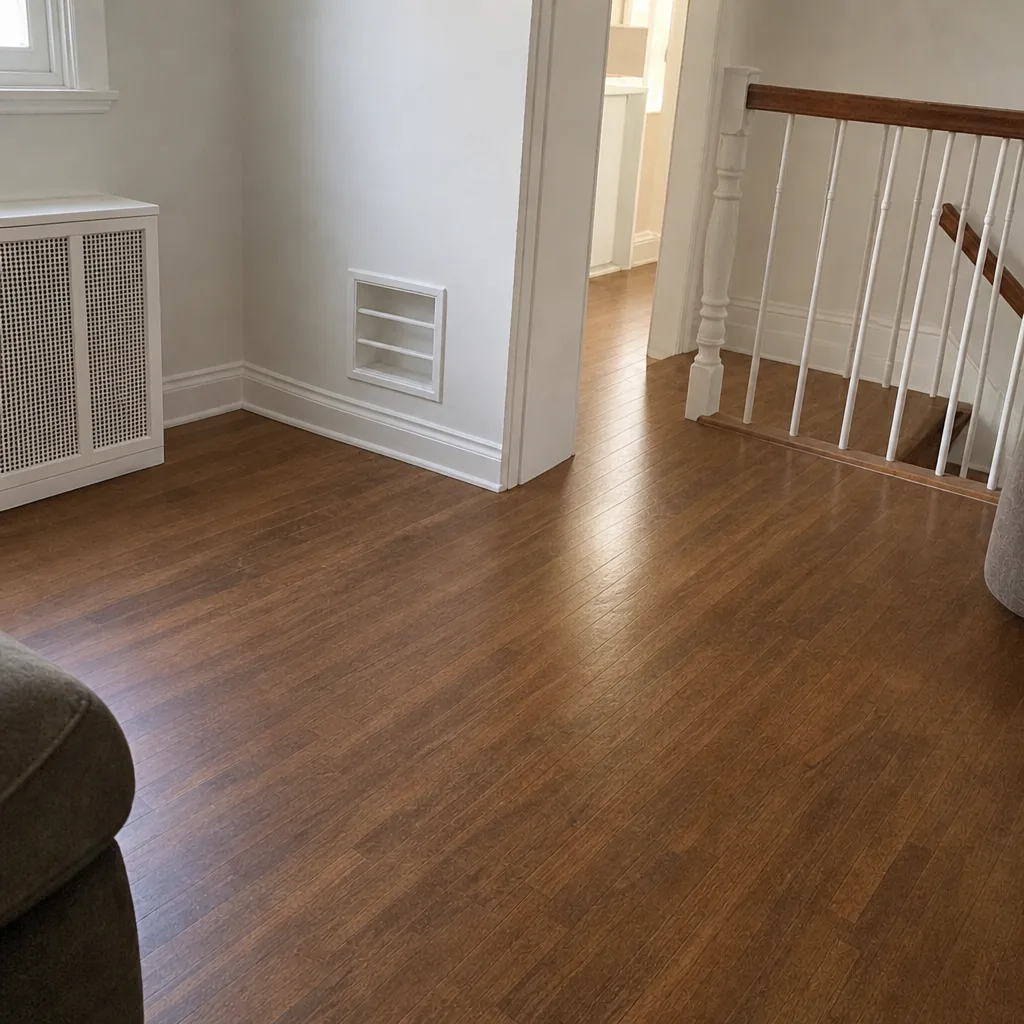 After
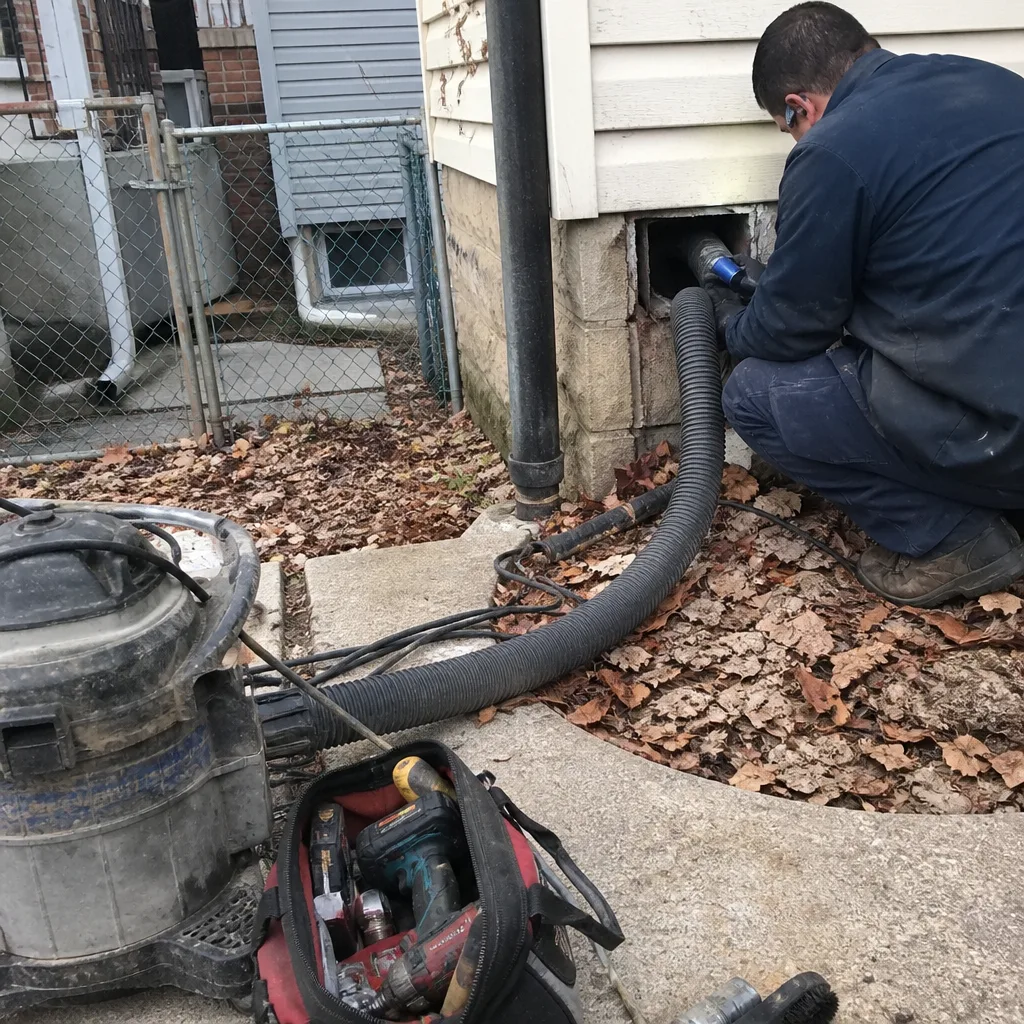 Before
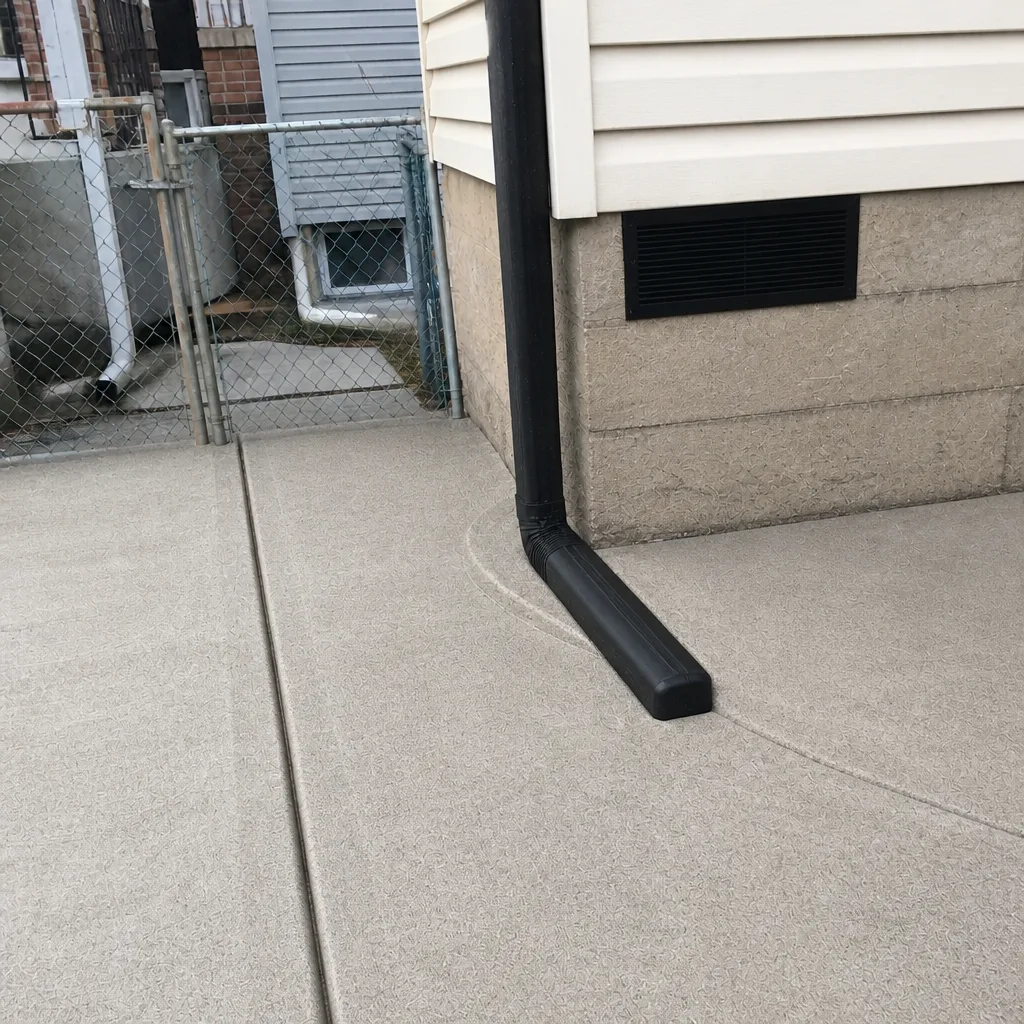 After
When to Call a Professional
You should call a duct specialist immediately after any fire in or near your unit, after any water event that reached the ductwork, after any sign of rodent activity inside the system, or after a renovation in your building that produced heavy dust. You should also call if you smell smoke, must, or ammonia any time the HVAC runs, if you’re seeing visible dust blow out of a register, or if you’re filing an insurance claim and need a documented inspection report. These are the scenarios where DIY attempts tend to make the situation worse rather than better, and where professional equipment like what we run actually matters. Air Duct Cleaning Jackson Heights offers free estimates in Jackson Heights. Call (844) 443-4566. We answer 24/7. Fast dispatch from 7am to 7pm, Sunday through Friday.
Frequently Asked Questions
As soon as the building is safe to enter and the fire department has cleared the unit, ideally within the first few days. Combustion particulate settles quickly and continues to redistribute through the system every time the HVAC runs. Addressing it early limits how deeply it embeds in duct walls and reduces the odor problem that tends to linger otherwise. Call (844) 443-4566 for an inspection – estimates are free.
Not reliably, because the materials inside duct systems (fiberglass liner, insulation board, textile-wrapped flex) hold moisture in ways that surface drying cannot address. Mold colonization becomes likely within 24 to 48 hours of moisture exposure, and in a humid Jackson Heights summer that window is even tighter. A professional inspection with moisture readings is the only way to confirm the duct interior is dry. Call (844) 443-4566 to schedule an assessment – estimates are free.
Often, yes, if the duct contamination is tied to a covered event (fire, water damage, or a covered loss) and the claim is filed with proper documentation. What insurers need is a written inspection report with photos of the affected duct interior, an itemized scope of work, and a clear link between the event and the contamination. We provide the report and before-and-after photos so you can submit them directly. Call (844) 443-4566 to arrange an inspection – estimates are free.
It’s a biohazard. Rodent droppings, urine, and nesting material carry pathogens, and disturbing them without containment sends contaminated dust into the living space. Standard vacuuming or brushing without containment can make air quality worse. Professional remediation involves negative-pressure containment, HEPA extraction, disinfection, and sealing the entry point afterward. Call (844) 443-4566 to schedule a proper assessment – estimates are free.
Probably, especially if you’ve seen visible dust in your return registers or noticed more dust settling on surfaces around the unit. Shared shafts and gaps in the building envelope let fine construction particulate travel fast in a multi-family Jackson Heights building, and much of it ends up inside the duct system. A professional inspection confirms whether cleaning is warranted. Call (844) 443-4566 – estimates are free.
No. Running the system pushes the combustion particulate in the ductwork into every room, spreading the problem rather than solving it. Shut the system off at the thermostat and leave it off until the ductwork has been professionally inspected and cleaned. That’s the single most important thing to do in the first hour after a fire or smoke event. Call (844) 443-4566 for an emergency inspection – estimates are free.
The Bottom Line
Ductwork absorbs what emergencies leave behind, and it redistributes it every time the system runs. Whether the event was a fire, a flood, a pest intrusion, or a renovation in a neighboring unit, the sequence is the same: shut the system off, document the condition, get a professional inspection, and follow through on cleaning, sanitizing, repair, and sealing so the same entry point doesn’t reintroduce the same problem next year. A written report with photos is what turns a claim into an approval, and a properly cleaned and sealed duct system is what turns a bad event into a one-time problem. When something does happen, Air Duct Cleaning Jackson Heights is structured to handle the full arc from cleaning to sealing in a single visit. Call (844) 443-4566. We answer 24/7. Fast dispatch from 7am to 7pm, Sunday through Friday.
Written by the team at Air Duct Cleaning Jackson Heights.